A large sculpture changes a place differently from almost anything else you can add to a garden.
Furniture moves. Planting grows and changes. Architecture creates the boundaries of a space. Sculpture can give the eye somewhere to rest. It can mark an arrival, hold the end of a view, or make a part of a garden that once felt incidental suddenly feel intentional.
When I begin a marble sculpture commission, I rarely begin by asking what kind of sculpture someone wants. I begin with the place.
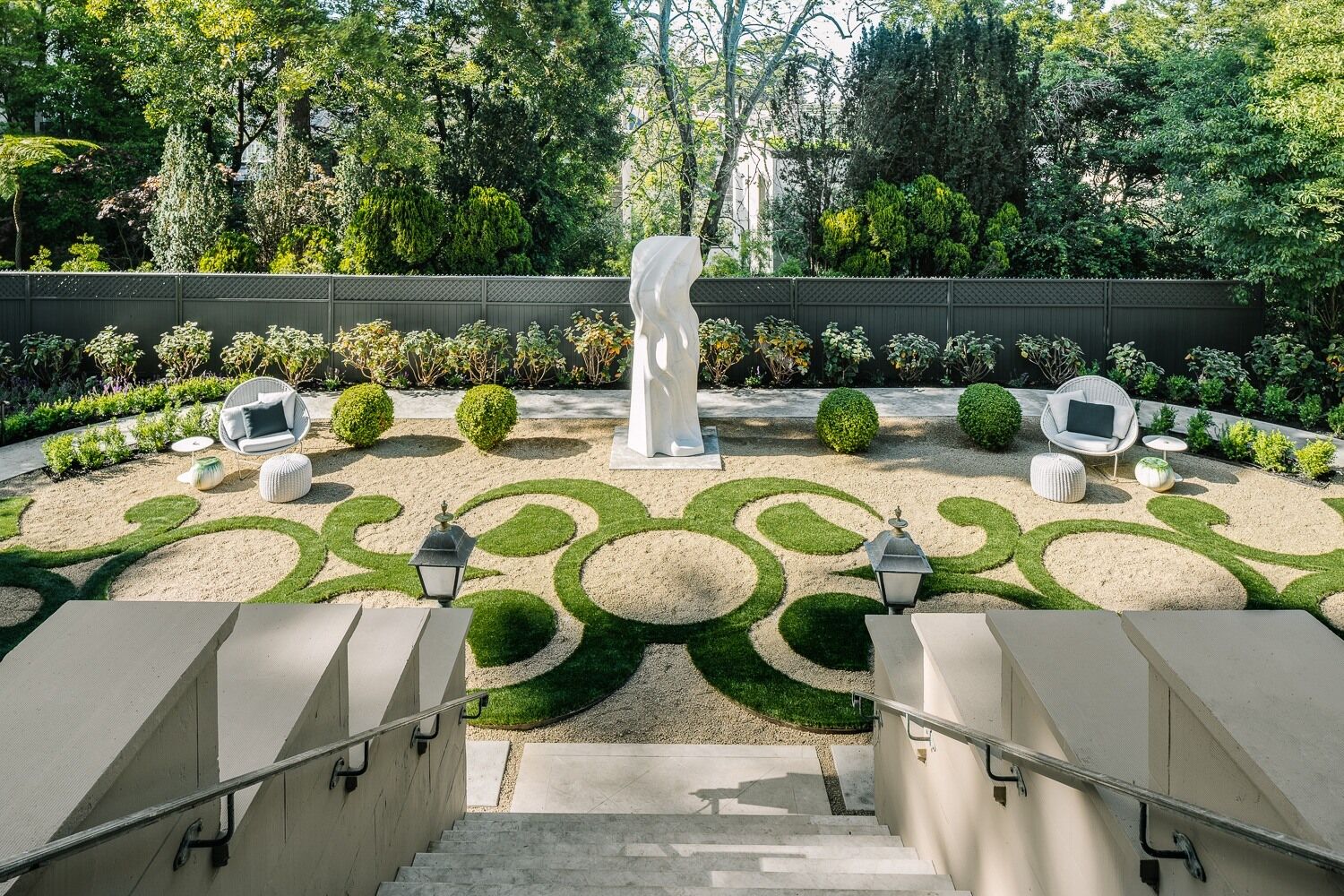
Start with the site
The first questions are architectural.
Where do you enter? What do you see from the house? Where does the garden open up? Is there an axis, a courtyard, a long view, a change in elevation, or a place where people naturally stop?
A sculpture seen from twenty feet away has a different job from one approached across a lawn. A work placed at the end of a formal garden needs a different silhouette from one encountered gradually along a path.
I also look at the proportions of the house and landscape. A sculpture should have enough presence to belong to its setting without feeling dropped into it.
At the University of San Francisco, for example, the site already had an extraordinary view over the city. What it lacked was a center. The placement of Tides gave the terrace a point of focus and changed the way the space was read from the surrounding paths and stairs.
This is one reason I prefer to think of sculpture as part of a place rather than as an object added after everything else is finished. You can see more of this way of working in my public art projects.
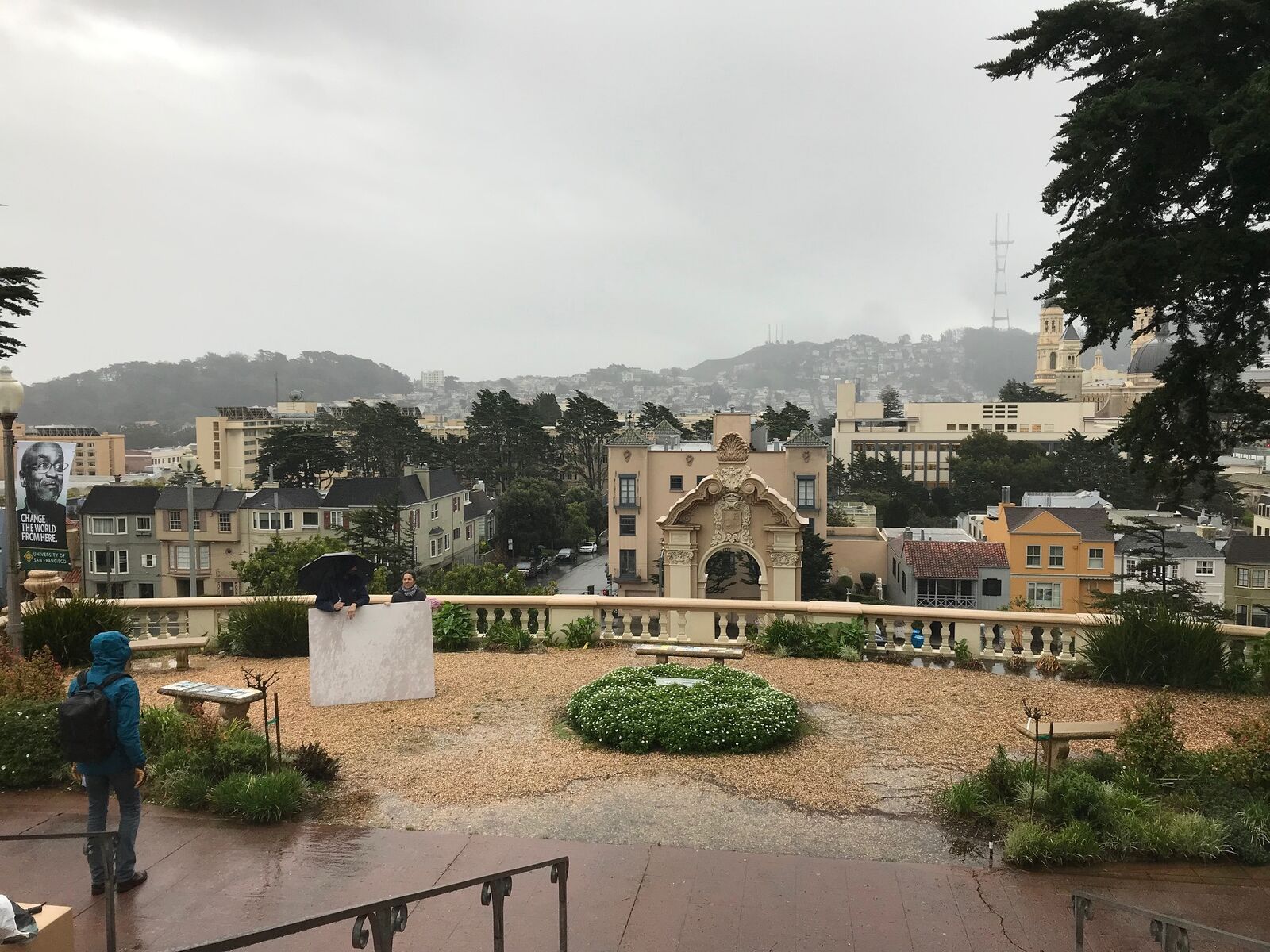
Before
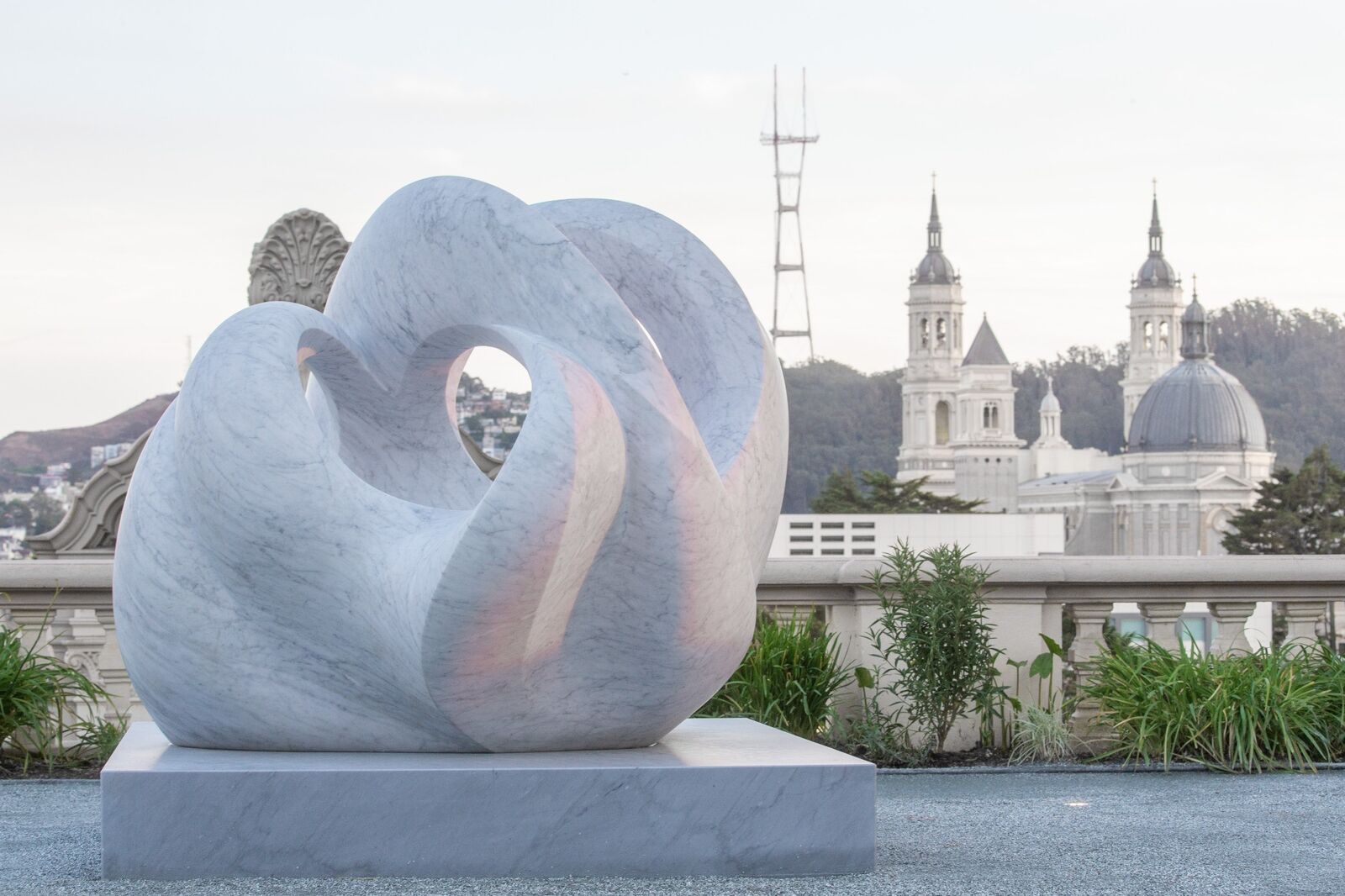
After. Tides, University of San Francisco.
Decide what the sculpture needs to do
Before thinking about marble or bronze, it helps to ask a simpler question:
What should change once the sculpture is there?
Perhaps the garden needs a focal point.
Perhaps an entry court feels incomplete.
Perhaps there is a beautiful view from inside the house, but nothing outside gives the eye a place to land.
Sometimes a commission is connected to a person or occasion. An anniversary, a new home, a family milestone, or a memorial can become the reason for the work without requiring the sculpture to become literal or figurative.
The meaning can remain private.
A curve might come from a landscape someone loves. A title might refer to a memory, a place, or a piece of mythology. The finished work can remain abstract while still belonging very specifically to the people who commissioned it.
Scale is difficult to judge outdoors
One of the most common surprises is how small sculpture can feel in a landscape.
A six-foot work sounds enormous in a studio. Outside, surrounded by mature trees, architecture, sky, and distance, it can suddenly feel quite modest.
For this reason, scale should be studied in relation to the site rather than chosen from a catalogue of dimensions.
Sightlines matter. So does the height of surrounding planting, the width of the garden, the distance from the house, and whether the sculpture will be seen mainly on foot or from inside.
Models, scaled drawings, site photographs, and simple digital studies can be very helpful here.
The goal is not simply to make something large. It is to find the scale at which the work feels inevitable in the space.
Choosing the material
Material changes the character of a sculpture almost as much as form.
Marble holds light in a very particular way. A pale marble can appear almost luminous in shade, while direct sun brings out its structure and veining.
Granite has greater visual density and can feel quieter, darker, and more grounded.
Bronze brings a different kind of freedom. It can allow thinner passages, larger spans, and surfaces that change gradually outdoors.
The architecture and landscape often suggest the material.
A pale stone may disappear beautifully into a Mediterranean planting scheme. A darker granite can create contrast against pale stucco or dry grasses. Bronze may work where weight, span, or engineering makes carved stone less practical.
There is no universally correct material. The important question is what belongs in that particular place.
Choosing the stone in Tuscany
For larger marble commissions, the choice of stone can become part of the commission itself.
Collectors may choose to join me in Tuscany for stone selection and, by prior arrangement, a visit to the marble quarries near Carrara.
Standing among the quarry walls and the cut blocks gives an entirely different sense of the material. Marble stops feeling like a polished surface and becomes geological again. The scale is difficult to understand until you are there.
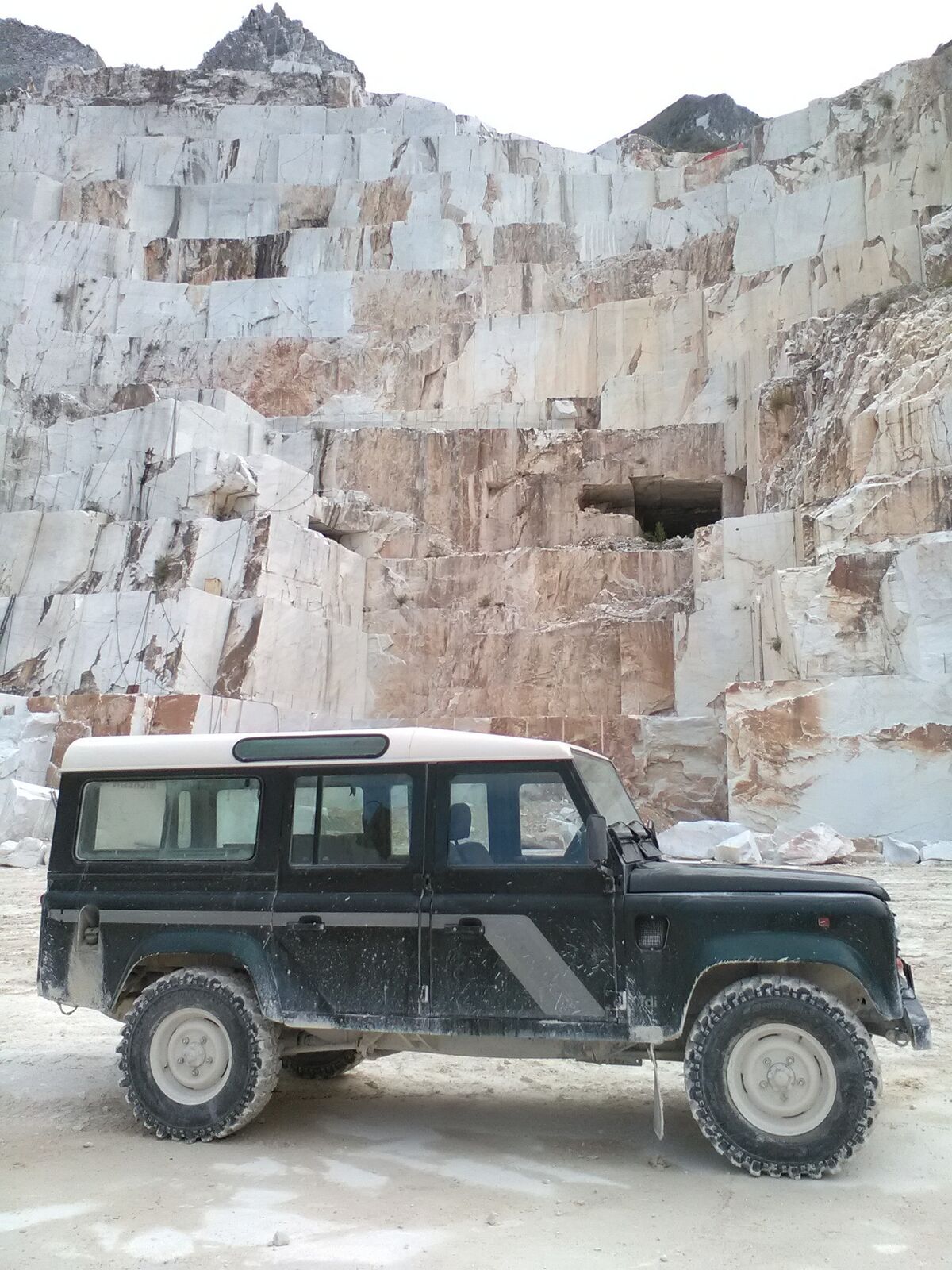
Carrara, Tuscany.
Individual blocks can vary considerably. I look at veining, consistency, fissures, color, dimensions, and how the character of the stone might work with the form I am developing.
Sometimes the cleanest-looking block is not the most interesting one.
A faint grey vein can become beautiful when it passes through a curve. A warmer passage can give an otherwise pale sculpture more depth. The block has to be considered from several sides because the sculpture will eventually reveal material that is still hidden inside it.
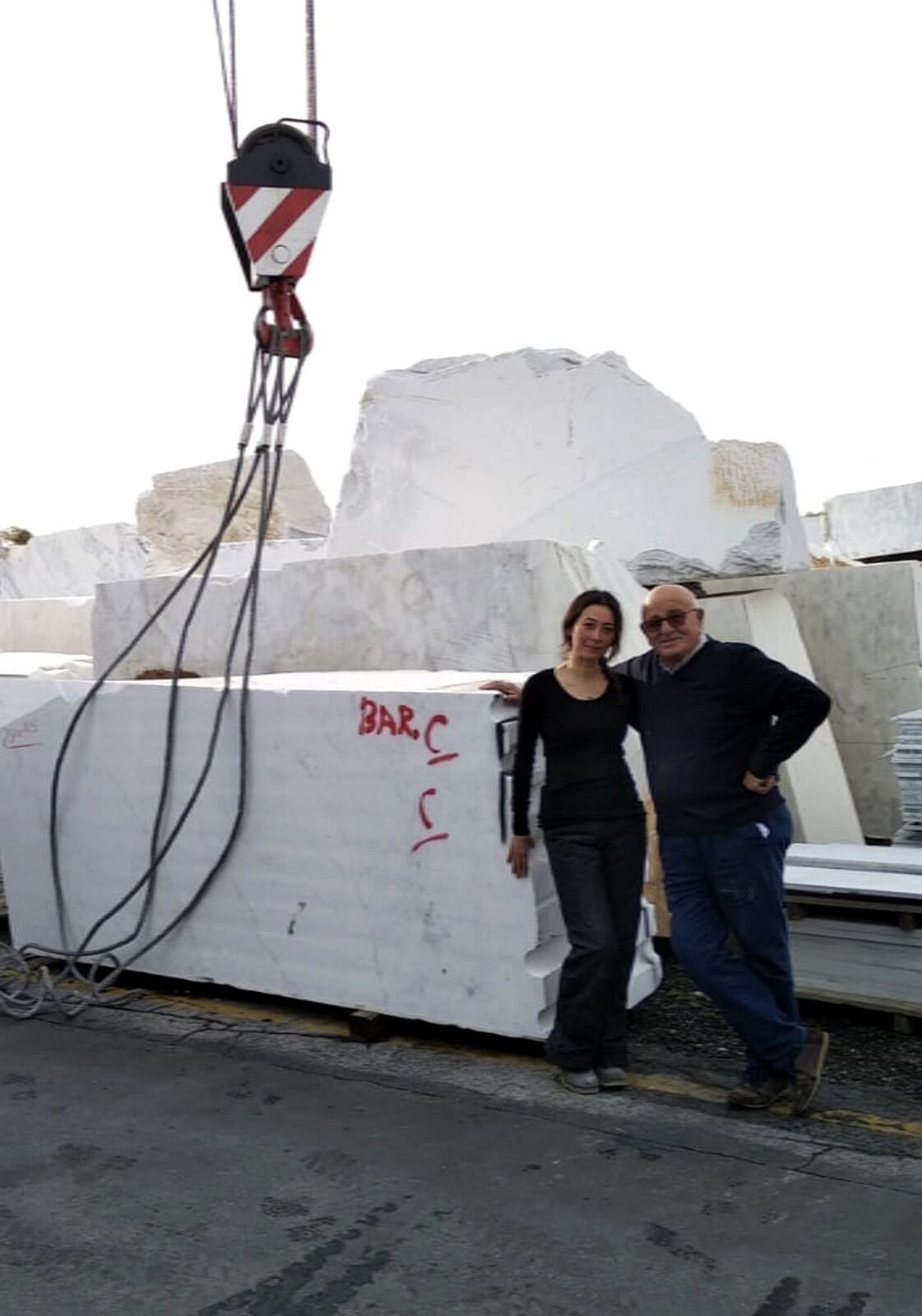
Selecting the stone.
Selecting the stone is often one of the parts people remember most.
The finished sculpture later carries a very specific history. This was the mountain. This was the block. This was where the work began.
From block to sculpture
Once the stone reaches the studio in Pietrasanta, the work begins to move from drawing and model into full scale.
The early stages can be surprisingly physical. Large amounts of material have to be removed before the more subtle decisions begin.
As the form develops, the process becomes increasingly precise.
Curves are adjusted by fractions. Transitions are softened. Openings are enlarged or reduced. A surface that looked correct in a model may need to change once it exists at human scale.
Much of sculpture is looking.
You walk around the work, step away from it, return to it, change something, and look again.
The final surface is only one part of the process. The proportions and movement have to work from every direction long before polishing begins.
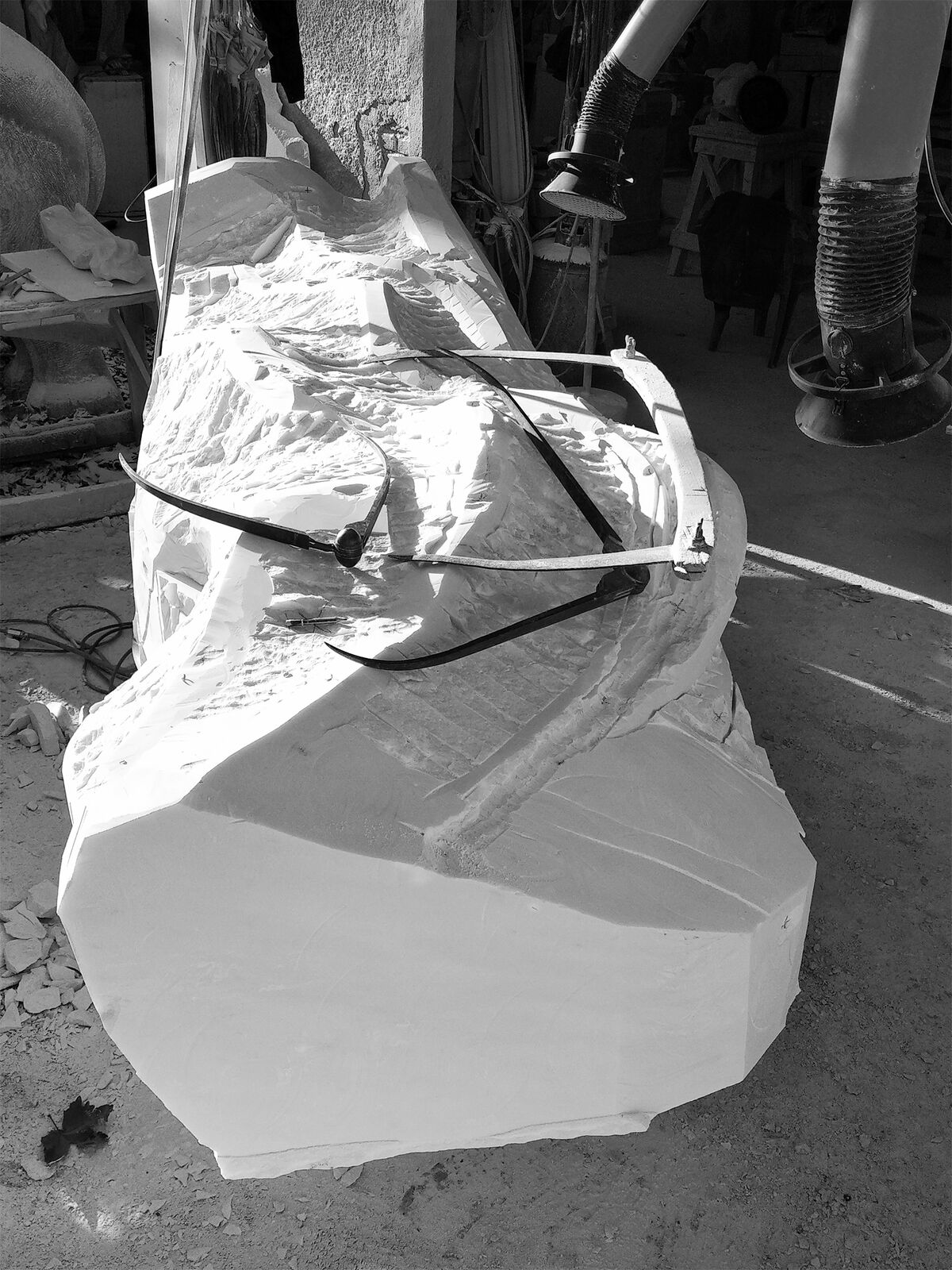
In the studio, Pietrasanta.
Engineering is part of the commission
With large outdoor sculpture, the artistic process and the technical process eventually meet.
The weight of the work, the base, soil conditions, wind, seismic requirements where applicable, public access, and installation method all affect how the sculpture is anchored.
My larger projects have involved structural engineers, stamped engineering drawings, custom footings, fabrication schedules, rigging plans, and crane installation.
These things should not feel separate from the artwork.
A base that is too large can make a sculpture feel heavy. A poorly considered footing can complicate the landscape. Visible hardware can interrupt a form.
The technical solution should disappear as much as possible once the work is installed.
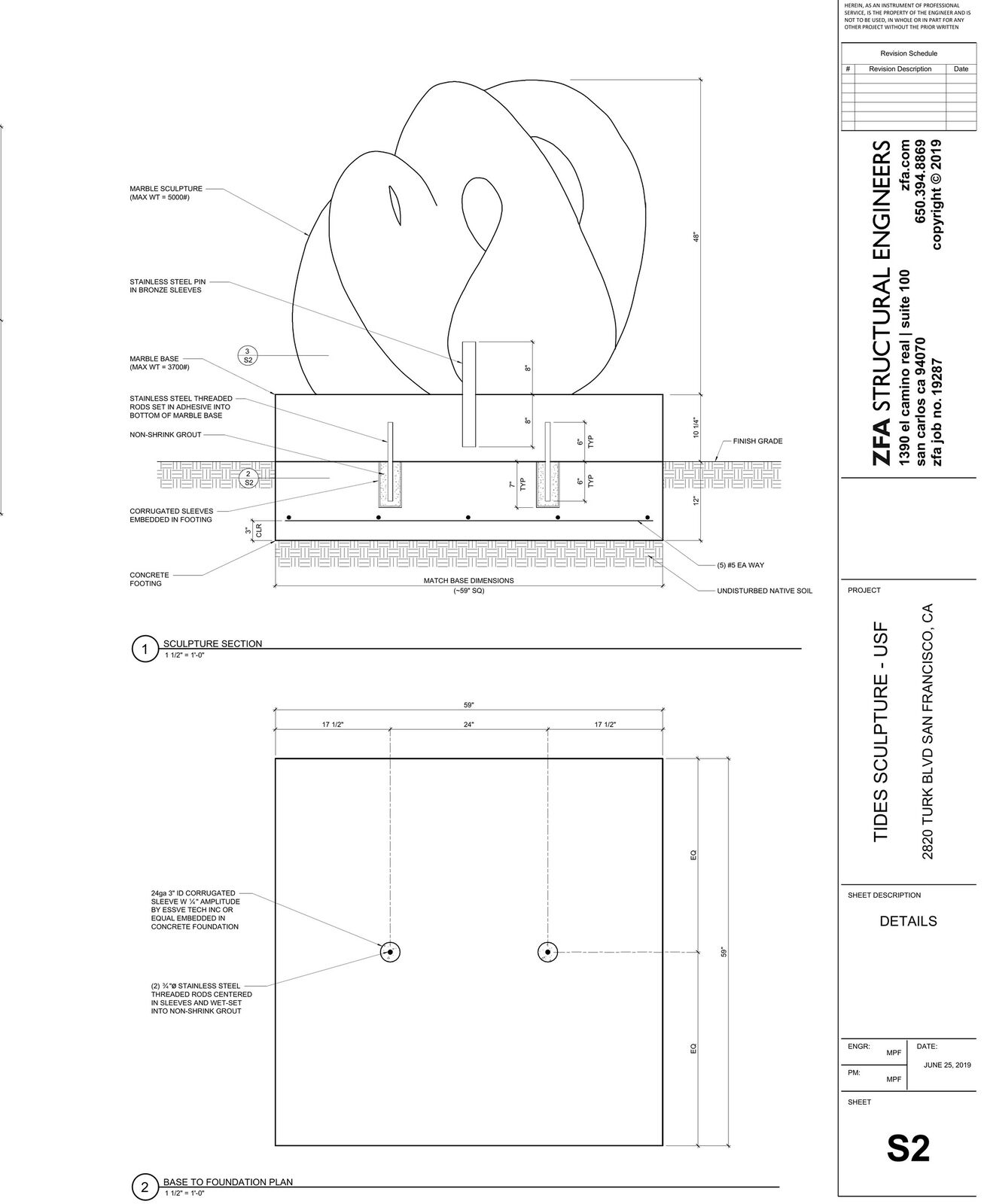
Structural engineering and foundation detail for Tides, University of San Francisco.
Installation should be considered early
A finished sculpture still has to reach its place.
Access can become one of the most important practical questions in a garden commission.
Can a truck reach the site? Can a crane work from the driveway or street? Are there trees, walls, power lines, gates, terraces, or neighboring buildings to consider?
At Le Petit Trianon in San Francisco, the placement of Lethe required crane access into a historic property and careful coordination with the surrounding garden work.
At the University of San Francisco, Tides required a prepared foundation, a separate stone base, rigging, and crane-assisted placement.
Thinking about installation early prevents compromises later.
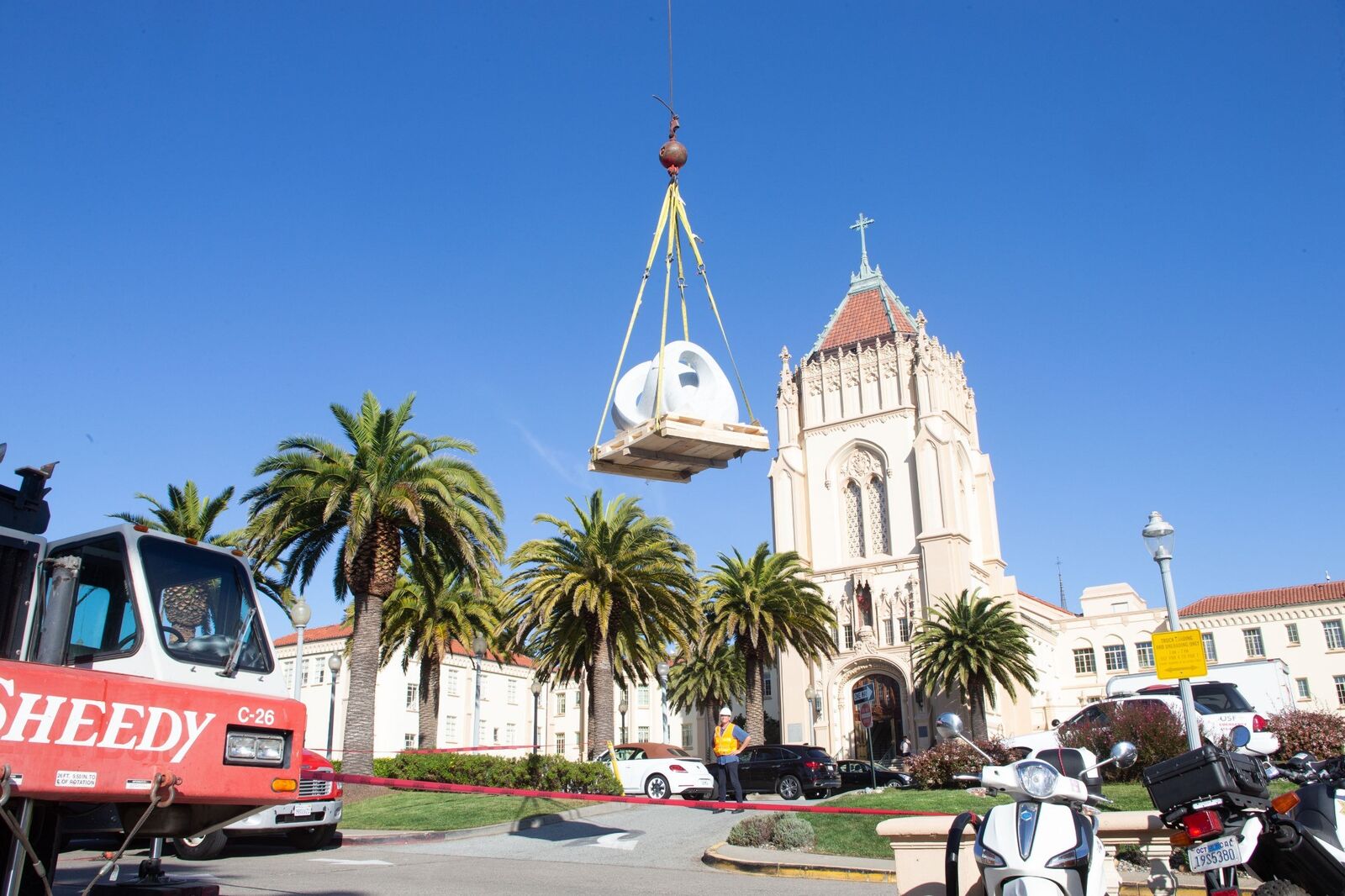
Crane installation of Tides at the University of San Francisco.
How long does a sculpture commission take?
A significant sculpture should not be rushed.
The timeline depends on scale, material, stone availability, engineering, fabrication, shipping, and site preparation.
A marble commission may involve time for locating the right block before carving even begins. A bronze may require modeling, enlargement, mold making, casting, welding, chasing, patination, and installation.
For a major work, I generally prefer to think in months rather than weeks.
The site work and sculpture fabrication can often proceed in parallel once the design has been established.
What affects the cost of a sculpture commission?
The price of a commission depends on considerably more than dimensions.
Material is one part of it, but the final project may also include:
- stone selection or bronze casting
- fabrication
- structural engineering
- custom bases and footings
- international freight
- crating
- insurance
- rigging
- crane installation
- site access requirements
- travel
- documentation
Complexity matters as well.
A large, relatively simple stone form may be less demanding to fabricate than a smaller sculpture with deep undercuts and difficult internal passages.
For this reason, meaningful pricing usually begins with the site and the proposed work rather than a price per inch or square foot.
Living with sculpture
The part I find most interesting begins after installation.
A sculpture outdoors changes constantly.
Morning light is different from late afternoon. Rain darkens stone. Plants grow around the work. A sculpture seen from the house in winter may feel completely different from the same view in summer.
People develop habits around it.
They walk past one side every morning. Guests stop in front of it. Children notice openings and curves that adults sometimes miss. A sculpture gradually becomes part of the memory of the property.
That is when the work stops feeling newly installed and starts to belong.
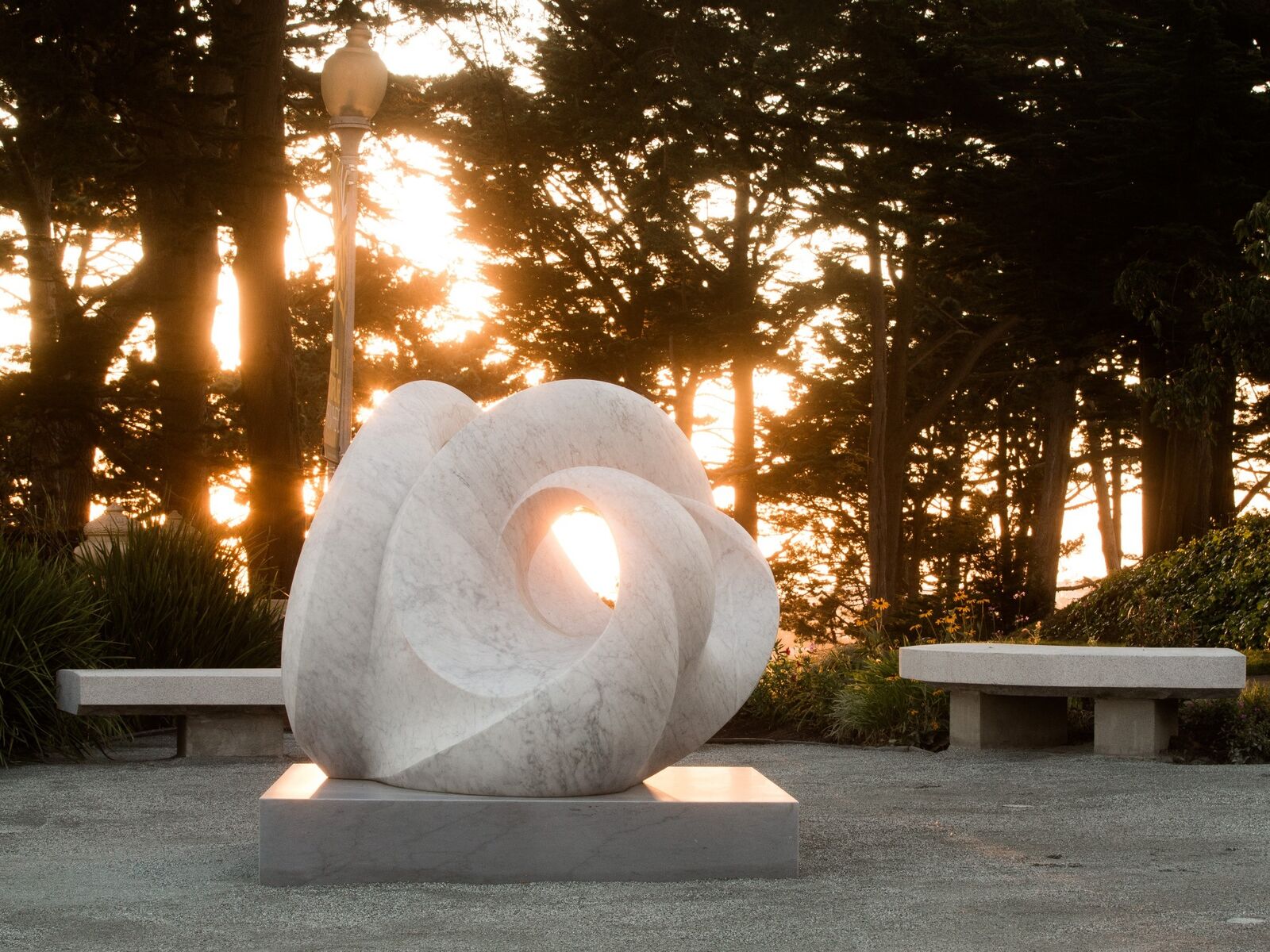
Tides drone film, University of San Francisco
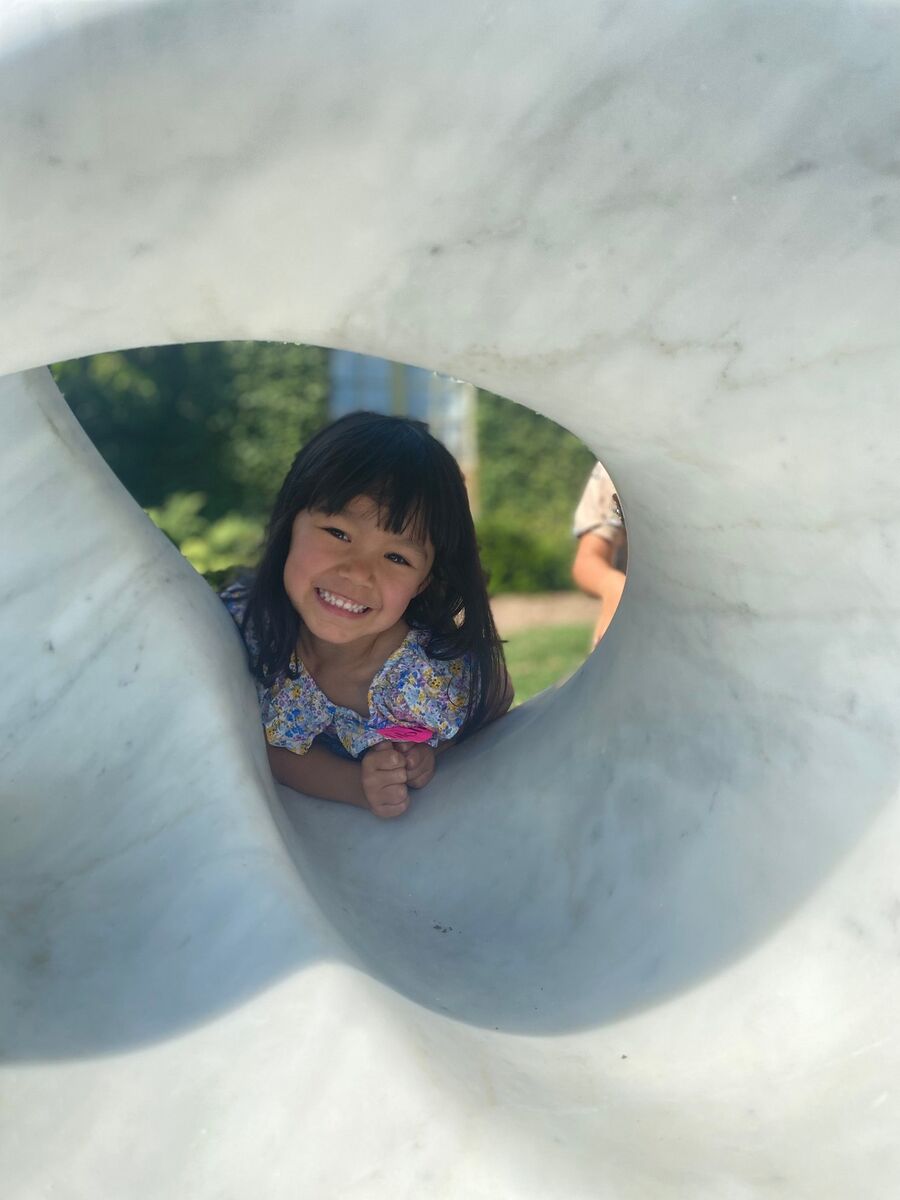
Filoli, Woodside, California.
How to begin
You do not need to know what the sculpture should look like before beginning a conversation.
A photograph of the site, a landscape plan, architectural drawings, or even a description of the place is often enough to start.
The most useful things to know are where the work might live, what you see around it, and what you hope will feel different once it is there.