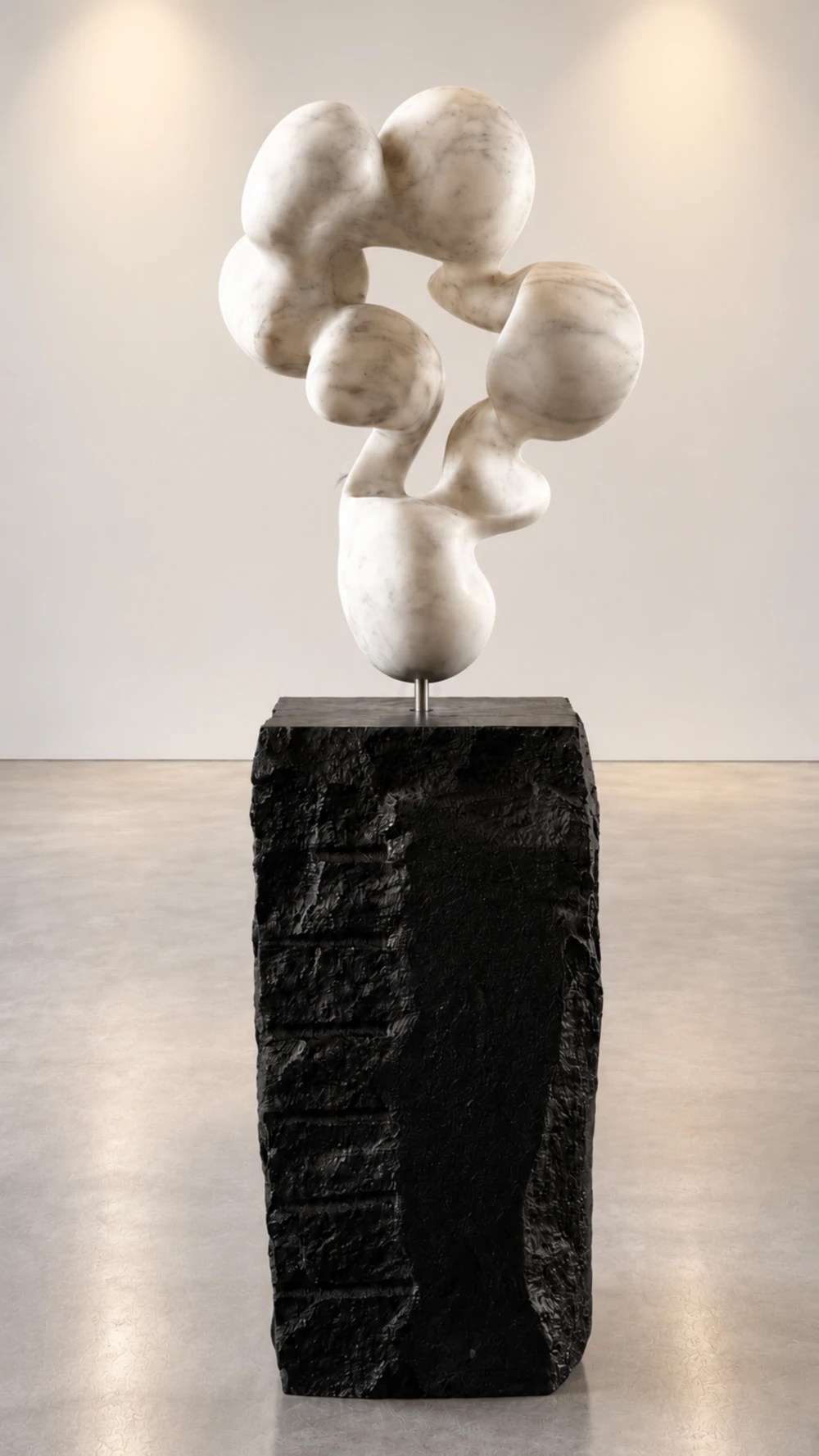
Cloud Atlas: On Floating Worlds
- Year
- 2026
- Sculpture
- 76 × 55 × 27 cm (29.9 × 21.7 × 10.6 in)
- Granite pedestal
- 85.5 × 35 × 45 cm
- Combined height
- 165 cm (64.9 in)
The name Cloud Atlas came to me through a story about artistic inspiration. In an interview in Paris Review David Mitchell told the story of how he came to title his book. He was in a music store and happened upon a CD by the Japanese composer Toshi Ichiyanagi (who happened to also be Yoko Ono’s first husband). He bought the CD because he loved the title of the track Cloud Atlas. That title went on to inspire his book about interconnected human spirits that cross over different timelines.
When I stumbled upon the name Cloud Atlas, I felt a connection to the beauty of the contradiction. The title Cloud Atlas traveled from Ichiyanagi’s Japanese avant garde music, into a book (David Mitchel), then a movie (Land Wachowski and Lilly Wachowski), back to music in Cloud Atlas Sextet (composed by Tom Tykwer, Johnny Klimek, Reinhold Heil and orchestration by Gene Pritsker) and then found its way into my little sculpture. I love the thought of those two words traveling from music to literature, to movie, to music and then to sculpture, opening doors to new worlds along the way.
An atlas makes one think of a place we can precisely locate, a geography with a fixed location. We can meet there, we can return to it. Clouds on the other hand are something completely different. They are constantly changing form, moving and morphing into something else like human beings. The two words together have a magical quality to me, an imagined landscape that can never stay still.
Visually, the sculpture was inspired by the feeling of wonder I had from Hayao Miyazaki’s Castle in the Sky. A hidden world suspended above our own. I love the imagery of floating islands, hidden, mythical floating worlds. And this image, heavy landscape reaching up into the clouds.
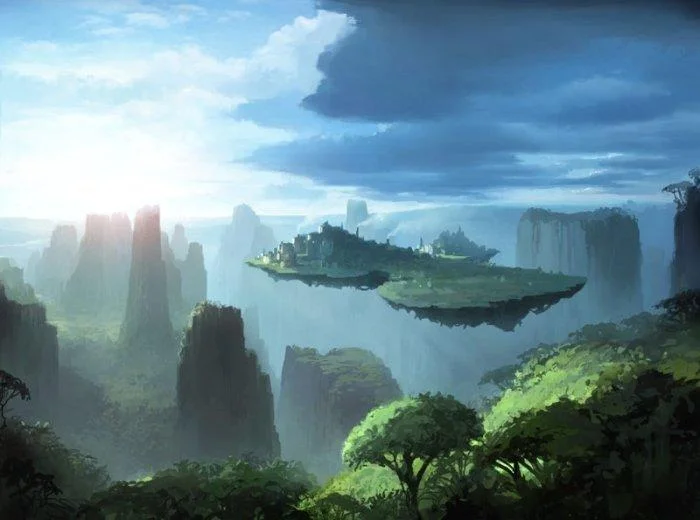
In my sculpture Cloud Atlas, I was inspired by that feeling. I took the forms from the stylistic way clouds are portrayed in Japanese woodblock prints. The curves and folds are reaching up and have the feeling of unfolding themselves into the air above the earth- which is represented by the rough dark granite base. The cloud is a small floating world.
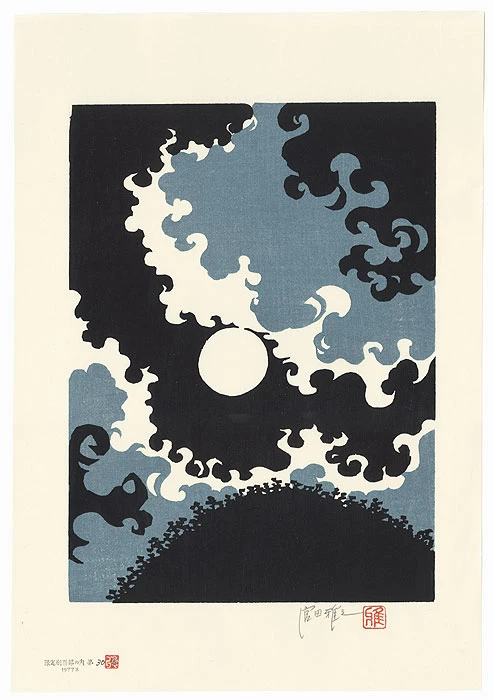
Moon and Clouds, 1977
In Cloud Atlas, I wanted to bring that feeling into marble. The swell of the curves turn around open space, suggesting a form gathering and unfolding in the air. The smooth white marble becomes a small floating landscape, held somewhere between earth and sky.
Cloud Atlas was originally created as a study for a larger-scale sculpture I proposed for a healing garden in Florida.